
Studio Green Architects
Do you have a project and you want to make it more sustainable?
The Global Call Meets the Indian Reality
The Paris Agreement gave the world a single, clear mission, but it recognised that every country’s starting point is different. For India, the big challenge is to take action against climate change simultaneously, helping its large population become prosperous and making sure everyone has enough energy. Our national commitment to the planet isn’t just about global diplomacy but a domestic necessity. It is a strategy that fuses sustainable development with ambitious climate action to ensure a better future for every Indian citizen. Considering the fact, what were India’s Nationally Determined Contributions against climate change?
India’s Climate Promise: The National Commitments (NDCs)
India’s approach is based on the idea of equity, which means fairness. It follows the principle of “Common but Differentiated Responsibility”, as enshrined in the UNFCCC. India’s NDCs are designed to grow its economy. It also provides a better life for its large population with its commitment to protecting the environment.
Validating the Resolve: Progress Report
India’s enhanced targets are underpinned by a proven track record. It demonstrates that its commitments are more than rhetorical and can be achieved ahead of schedule. At COP28 in Dubai, Prime Minister Shri Narendraji Modi specifically highlighted this success, noting the country’s rapid progress.
India achieved its initial goals well ahead of schedule, proving its robust commitments.
Initial NDCs Target (2015)
- To reduce the emissions intensity of its GDP by 33 to 35 per cent by 2030 from the 2005 level. This target focuses on making India’s economic growth (GDP) much cleaner.
- To achieve about 40 per cent cumulative electric power installed capacity from non-fossil fuel-based energy resources by 2030, with the help of the transfer of technology and low-cost international finance, including from the Green Climate Fund.
- To create an additional carbon sink of 2.5 to 3 billion tonnes of CO2 equivalent through additional forest and tree cover by 2030.
Achievement Status (as of 2023)
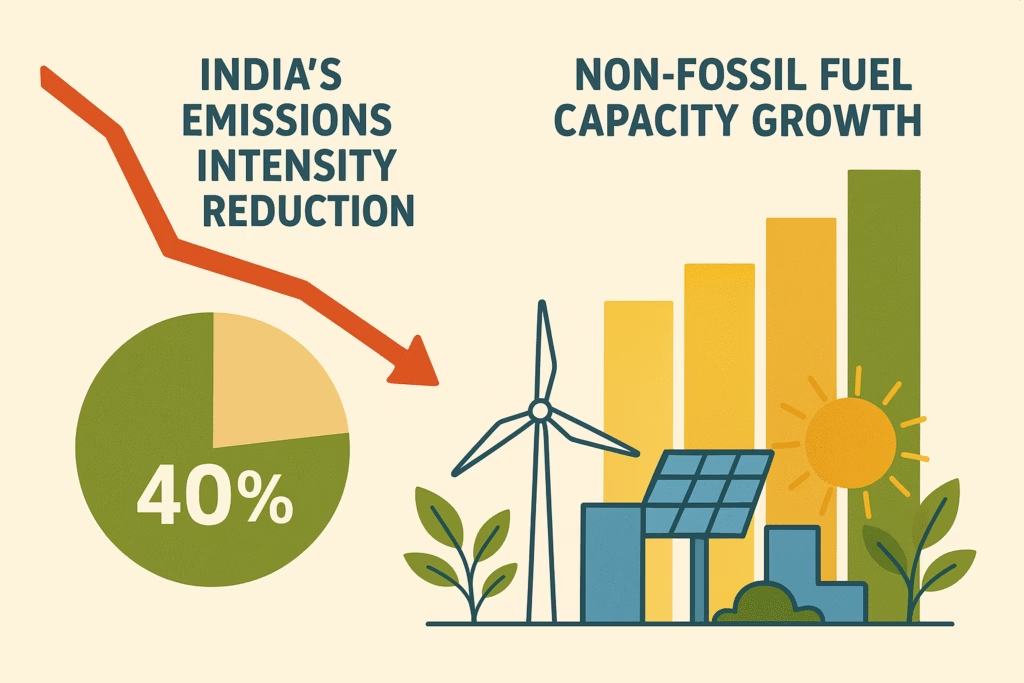
- Emissions Intensity: India met the target to reduce the emissions intensity of its GDP by 33 percent 11 years early in 2019 itself, according to India’s Third National Communication.
- Non-Fossil Fuel-Based Energy Capacity: India met the target of achieving 40 percent non-fossil fuel-based energy capacity 9 years early. As of October 2023, the cumulative electric power installed capacity from non-fossil fuel-based resources was already over 43 per cent.
- Ongoing: Afforestation efforts continue under the Green India Mission and CAMPA to meet this target.
The 2030 Roadmap: Defining India’s Ambition
Prime Minister Shri Narendraji Modi stated in COP28 Dubai that India is running ahead of its commitments, that is why further, the government of India updated its NDCs in 2022. Those are,
- Reducing the Emissions Intensity of its GDP by 45 per cent by 2030, from the 2005 level.
- Achieving about 50 per cent cumulative electric power installed capacity from non-fossil fuel-based energy resources by 2030.
- Also includes promoting a sustainable lifestyle through the “LiFE – Lifestyle for Environment” mass movement.
Watch Prime Minister Shri Narendraji Modi’s speech at COP28 Dubai here.
The Long-Term Vision
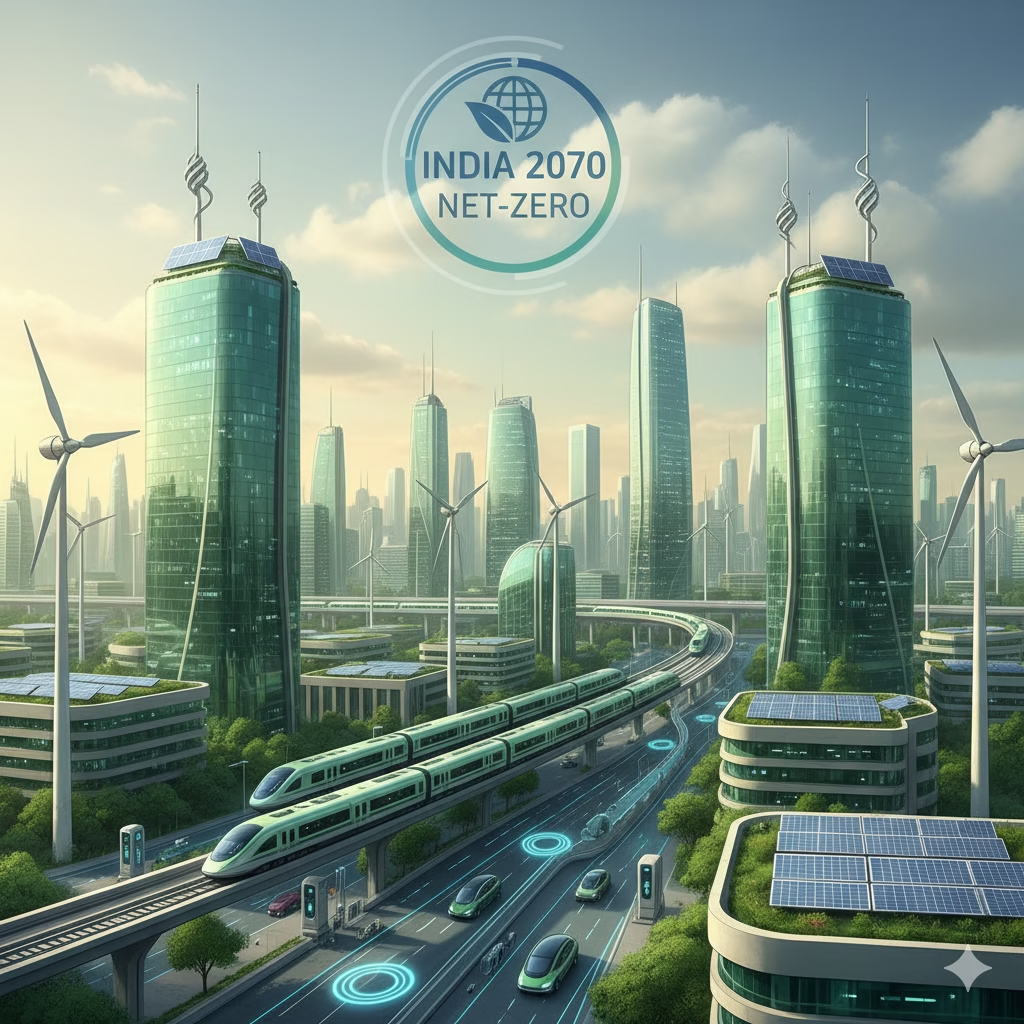
The long-term vision was introduced by Prime Minister Shri Narendraji Modi at COP26 in Glasgow. He made an announcement of the Net-Zero by 2070 target. The policy framework detailing the transition to this long-term goal is the Long-Term Low-Carbon Emissions Development Strategy (LT-LEDS), submitted to the UNFCCC at COP27 Egypt. The LT-LEDS outlines seven strategic transitions for low-carbon development, covering key sectors such as:
- Power (low carbon development of electricity systems)
- Transport (integrated, efficient, inclusive low-carbon system)
- Industry (enhancing material efficiency and recycling, exploring options for hard-to-abate sectors)
- Buildings and Urban Planning (promoting adaptation in urban design, energy and material efficiency in buildings)
Prime Minister Shri Narendraji Modi launched the Green Credit Initiative at COP28 Dubai. This participatory global platform aims to create carbon sinks and further the ideals of Mission LiFE (Lifestyle for Environment). This underscores the shift toward a sustainable, conscious lifestyle as a key element of the long-term low-carbon development strategy.
The declaration of the Net-Zero by 2070 target and the creation of the Long Term Low Emissions Development Strategy (LT-LEDS) provide the overarching blueprint for India’s future. This vision is not a distant goal; we are implementing it today. A massive state-driven push for cleaner energy and citizen-centric innovation actively translates the comprehensive policy framework into concrete action. This means tangible changes in our power sector, transport systems, and individual lifestyles now drive the macro-level commitment.
Action on the Ground: Transforming India’s Energy & Livelihood Landscape
Powering the Future: The Renewable Revolution
India is recognised as one of the world’s fastest-growing major economies for renewable energy capacity addition. It currently ranks among the top countries globally for installed capacity in renewable energy, solar power, and wind power. The nation is firmly on track to achieve its ambitious target of 500 GW of non-fossil fuel-based energy capacity by 2030.
Massive Scale-up of Solar and Wind
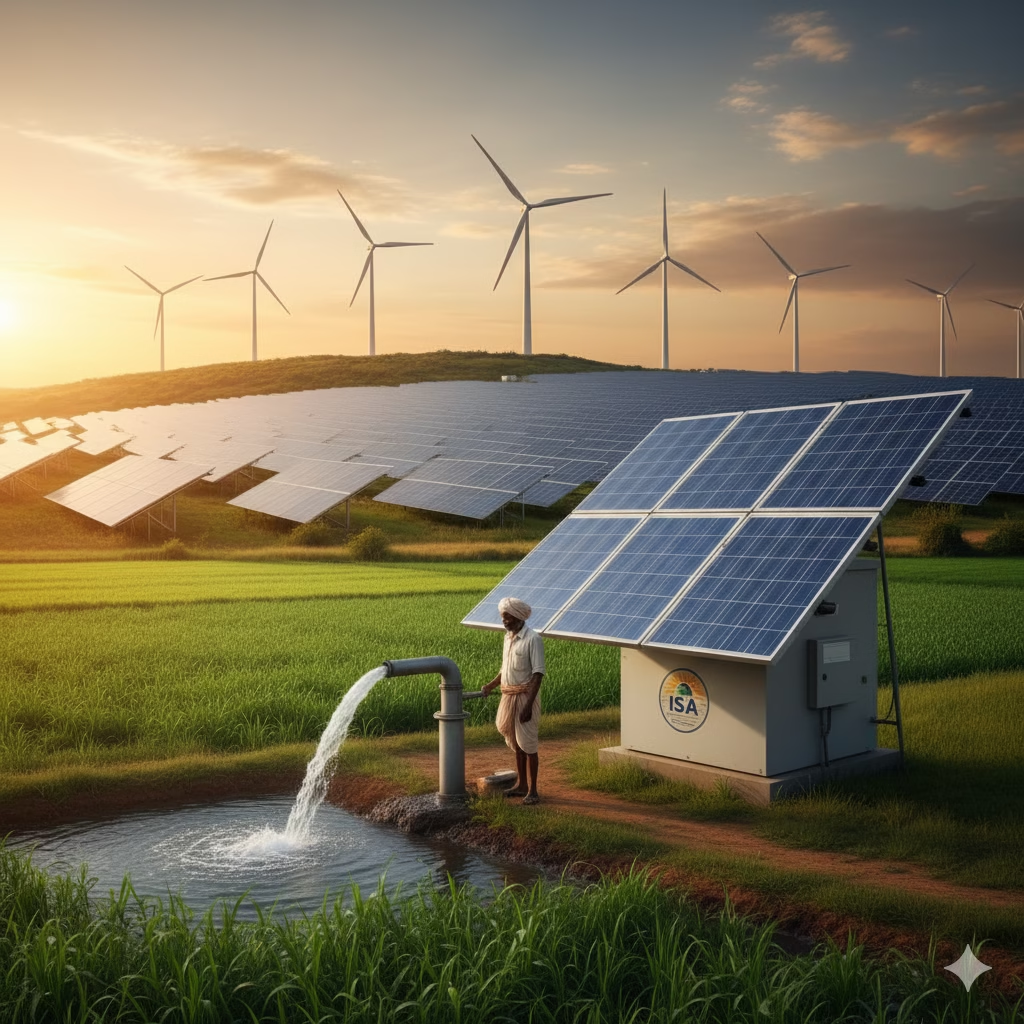
Solar Energy (ISA): The country is a co-founder of the International Solar Alliance (ISA). Its goal is to become the champion of the adoption of solar energy worldwide. India’s solar capacity has grown exponentially, driven by utility-scale solar parks and decentralised generation.
Wind Energy: India ranks highly globally in installed wind power capacity. The focus is now shifting to increasing the share of wind-solar hybrid projects. It focuses on utilising their vast onshore and offshore potential.
The Key Initiatives
PM-KUSUM Scheme: Solarising the Farm Sector
In 2019, the Ministry of New and Renewable Energy (MoNRE) launched the Pradhan Mantri Kisan Urja Suraksha evam Utthaan Mahabhiyan (PM-KUSUM) Scheme. The scheme provides farmers with energy and water security, enhances their income, and de-dieselises the farm sector.
From Roads to Rails: Sustainable Mobility
The transport sector is a major source of emissions. It is undergoing a significant clean transition focused on shifting from fossil fuels to electricity and public transport.
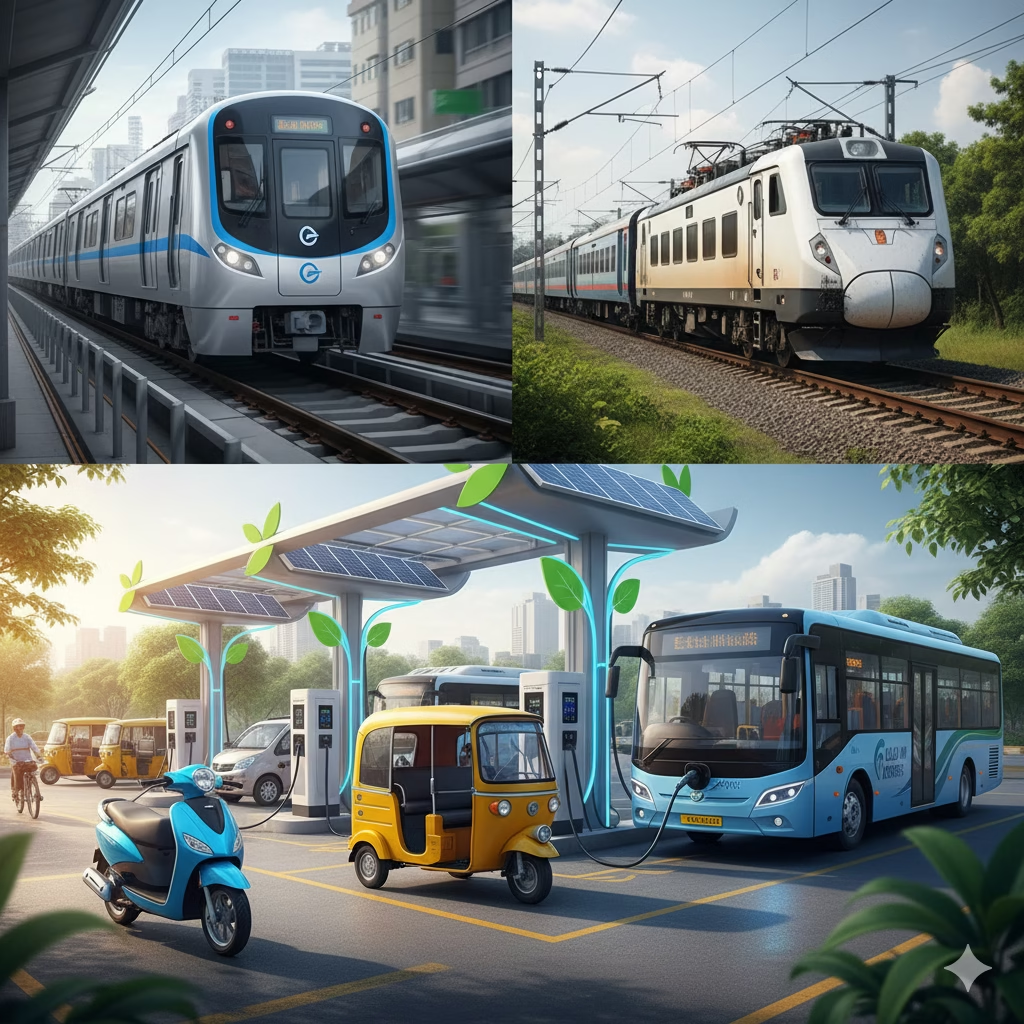
Metro Expansion: Rapid expansion of metro rail networks in major cities (e.g., Delhi, Mumbai, Bengaluru) encourages a shift from private vehicles to mass rapid transit, directly reducing urban vehicular emissions.
Railway Electrification Targets: Indian Railways has set an ambitious target to become a Zero Carbon Emitter by 2030. This involves 100 per cent electrification of its broad gauge network. It also focuses on massive sourcing of renewable energy to power the trains, significantly cutting diesel consumption.
The Key Initiatives
The FAME-II / EMPS 2024 / PM E-DRIVE Scheme for Electric Vehicles (EVs)
The Faster Adoption and Manufacturing of Hybrid and Electric Vehicles (FAME-II) scheme provided subsidies and incentives for the purchase of EVs and funded the development of robust charging infrastructure, accelerating the adoption of clean vehicles. On the conclusion of FAME II to ensure continuity in promoting EV adoption, the government introduced successor schemes, such as the Electric Mobility Promotion Scheme (EMPS) 2024. It is now subsumed in more comprehensive, long-term PM Electric Drive Revolution in Innovative Vehicle Enhancement (PM E-DRIVE) Scheme, which aims to provide subsidies to over 28 lakh EVs until March 31, 2026.
The Ethanol Blended Petrol (EBP) Program
The Ministry of Petroleum and Natural Gas officially initiated the Ethanol Blended Petrol (EBP) program in India in January 2003. The initial target of the program was 5% ethanol blending (E5) in petrol. In 2019, the Ministry extended the program nationwide. It directed Oil Marketing Companies to sell petrol blended with up to 10% ethanol (E10). India rapidly accelerated the program, officially advancing the target for achieving 20% ethanol blending (E20) from the original 2030 deadline to the Ethanol Supply Year (ESY) 2025-26.
It is a major climate action initiative. As ethanol burning is cleaner than petrol, it leads to a reduction in CO2 and other vehicular emissions. The program has saved significant foreign exchange and has resulted in the disbursement of large sums to distillers and farmers, promoting the rural economy.
Green Cover and Efficiency
Action is simultaneously being taken in the land and consumption sectors to enhance carbon absorption and reduce energy waste at the household level.
The Key Initiatives
Afforestation Efforts for the Carbon Sink Goal
Initiatives like the Green India Mission (GIM) and the Compensatory Afforestation Fund are central to achieving India’s NDC commitment to create an additional carbon sink. These efforts include restoring degraded forest land and planting trees on non-forest land.

Widespread Success of the UJALA scheme
The Unnat Jyoti by Affordable LEDs for All (UJALA) scheme made high-quality LED bulbs available at extremely affordable prices. The widespread adoption of over 360 million LED bulbs has resulted in massive annual energy savings. It reduced CO2 emissions substantially by over 38 million tonnes per year by avoiding the generation of power from fossil fuels.
Enhancing India’s Pro-Planet Mechanisms
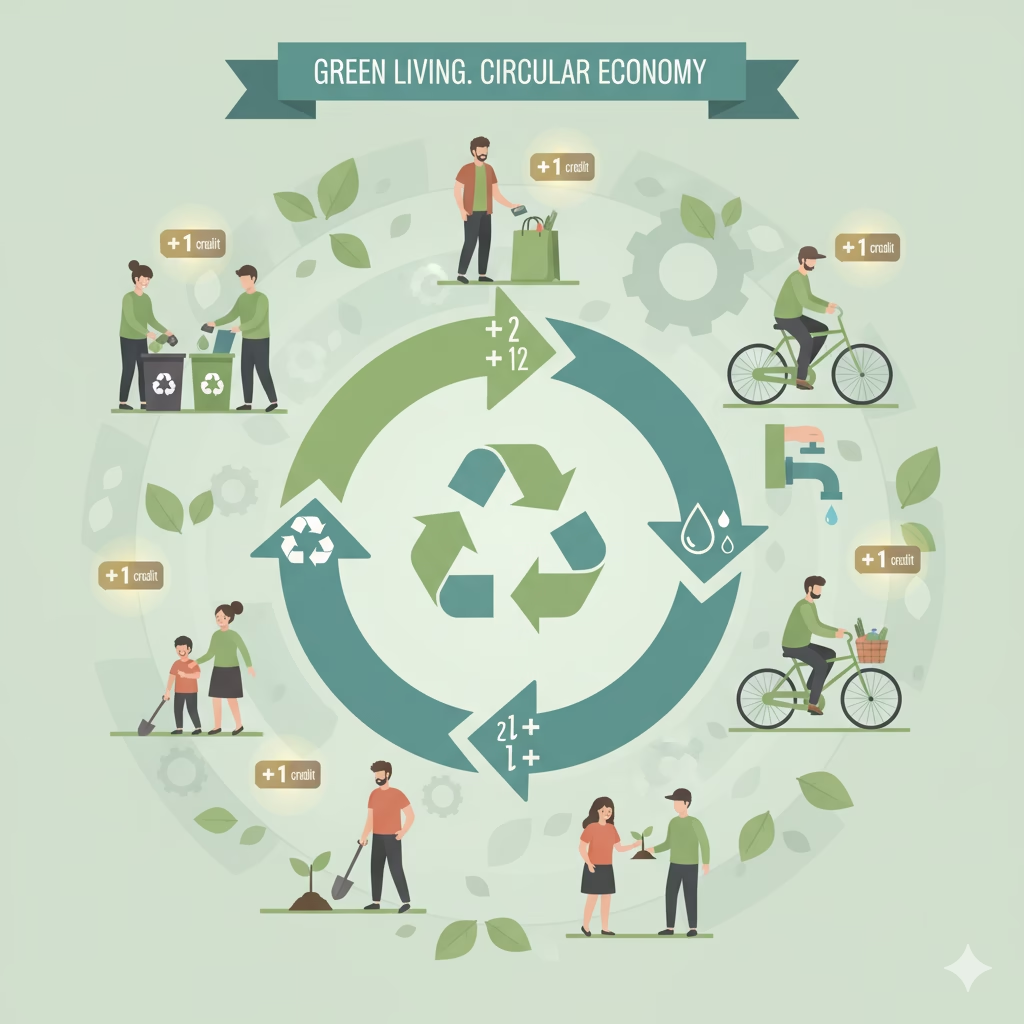
India’s New Mechanisms for Pro-Planet Action — Mission LiFE and the Green Credit Initiative (GCI) are innovative, non-mandated approaches to sustainability. Mission LiFE focuses on individual behavioural change, while Green Credit Initiative (GCI) is a market-based mechanism to incentivise voluntary environmental actions.
Mission LiFE (Lifestyle for Environment)
It is designed to shift global climate action from a purely policy-driven approach to a people-driven movement. It replaced “mindless and destructive consumption” with mindful and deliberate utilisation, promoting a circular economy. The mission aims to create and nurture ‘Pro-Planet People’ (P3) to adopt and promote environmentally friendly lifestyles. It operates through:
- Demand: Nudging individuals and communities to practice simple, concrete environment-friendly actions.
- Supply: Influencing industry and market supply to quickly adapt to the increased demand for green products and services
- Policy: Influencing government and industrial policy to support sustainable consumption and production.
The mission has identified 75 key actions across seven core themes for individuals and communities to adopt, which are, Save Energy, Save Water, Say No to Single-Use Plastic, Adopt Healthy Lifestyles and muc more.
Green Credit Initiative (GCI)
The Green Credit Initiative (GCI) is an integral part of the LiFE initiative, pioneering a market-based mechanism to incentivise voluntary environmental actions by all stakeholders—individuals, organisations, and companies. It establishes a framework to award tradable ‘Green Credits’ for verifiable, environment-positive actions. These credits are meant to provide a financial incentive for eco-friendly practices beyond just reducing carbon.
The Indian Council of Forestry Research and Education (ICFRE) is the designated Administrator, responsible for implementation, management, monitoring, and issuing the Green Credits. A dedicated digital platform/registry streamlines the registration and verification process. While initially focused on tree plantation and water conservation, the program covers an expanded list of activities like Tree Plantation (Afforestation), Water Management (Conservation, harvesting, and reuse). Air Pollution Reduction, Sustainable Building and Infrastructure and much more.
GCI is independent of the Carbon Credit Trading Scheme (CCTS). GCI focuses on broader environmental benefits (water, waste, agriculture, etc.), while CCTS focuses strictly on reducing greenhouse gas emissions CO2. This separation allows entities to benefit from both markets, ensuring a comprehensive approach to sustainability.
The commitment demonstrated through initiatives like Mission LiFE and the Green Credit Initiative firmly establishes India’s will to take decisive action across its society and economy. However, turning these ambitious domestic strategies and global pledges into reality runs headlong into India’s most significant national challenge: the necessity of balancing rapid economic development for a massive population with global sustainability commitments. This brings us to the core dilemma of the “India Way.”
The Unique Challenge: Balancing Growth and Sustainability:
The Development vs. Climate Dilemma
India’s primary national priority is to eradicate poverty, improve living standards, and provide universal energy access for its over 1.4 billion people. However, this pursuit of economic growth creates a significant dilemma:
- The Growth Imperative: Rapid industrialisation, urbanisation, and the expansion of key sectors like construction and manufacturing necessitate a massive increase in energy demand. Projections indicate that India’s energy demand will grow faster than the global average over the next few decades.
- The Energy Access Gap: India is making strides in renewables. Still, a significant portion of its current energy needs is met by fossil fuels, particularly coal. Completely phasing out fossil fuels instantly would risk energy security and cripple the economy, also jeopardising the development goals for millions.
- The Equity Argument (Per Capita Emissions): India’s stance highlights that its per capita emissions are significantly low, i.e., less than half the global average, approx. 2 tonnes per person vs. the global average of 4.7 tonnes. India argues it must be given the “carbon space” to grow, as developed nations historically contributed the majority of cumulative emissions during their own industrialization phases.
India’s Dual Goal: India is committed to an energy transition, i.e., reaching 50% non-fossil fuel capacity by 2030. It insists that this must be a just and equitable transition that prioritises the welfare and energy needs of its citizens.
Finance and Technology Gaps
India stresses that successfully navigating this unique challenge is contingent upon the support, specifically the fulfilment of commitments, from the developed world, based on the principle of Common but Differentiated Responsibilities and Respective Capabilities.
- Climate Finance Commitment: Developed countries had pledged to collectively mobilise 100 billion USD per year by 2020 to support climate action in developing countries. This goal has been consistently missed. India requires massive amounts of low-cost, concessional finance estimated in the trillions to:
- Scale up clean energy infrastructure (solar, wind, storage)
- Modernize the national power grid to handle variable renewable energy
- Invest in climate adaptation and resilience measures against increasing climate impacts
- Technology Transfer: Scaling up climate efforts requires access to cutting-edge green technologies. It includes green hydrogen, battery storage, Carbon Capture and Storage, and high-efficiency industrial processes. India advocates for:
- Removal of Intellectual Property Rights barriers on key green technologies.
- Co-development and collaborative transfer of advanced, low-cost technologies to accelerate its decarbonization pathway without incurring prohibitively high costs.
- India’s Position: India consistently asserts that providing this financial and technological support is an “onerous duty rather than a mere promise” for developed nations, essential for global climate justice and for bridging the gap between climate ambition and implementation in the Global South.
The intricate dance between the domestic need for rapid growth and the global demand for immediate climate action defines the “India Way.” While India consistently demonstrates its national resolve through ambitious targets and pioneering citizen-led movements like the Green Credit Initiative and Mission LiFE, the nation’s ability to fully meet its Net-Zero by 2070 commitment depends critically on fulfilling the promise of global Climate Justice. India’s success, therefore, is not merely a national triumph—it is the single most important test case for whether the developing world can achieve prosperity and environmental stewardship simultaneously.
Conclusion
The journey through the “India Way of Climate Action” shows a nation embracing its massive responsibility, proving that climate action and development can coexist. India’s success hinges not just on solar farms and electric cars, but on revolutionising the very spaces where its citizens live and work.
India’s commitment to climate action, particularly its goal of achieving Net-Zero by 2070, demands deep, systemic change in every sector. But one of the most critical and often overlooked areas for emissions is the buildings we construct. These spaces are currently huge consumers of energy, but they hold the potential to become part of the solution. What if our homes and offices could be designed to not only require almost zero energy but actually produce it? In our next post, we will explore this crucial pivot, diving into the future of construction: the world of energy-efficient and carbon-neutral buildings.