In the last several years, we have been experiencing warmer days than the normal threshold in the summer. For decades, scientists have warned us about a silent but accelerating threat: climate change. It’s more than just warmer days; it’s a fundamental shift in our planet’s long-term weather patterns and temperatures.
While the Earth’s climate has always undergone changes, the rapid and severe warming we are experiencing now is primarily due to human activities, specifically the burning of fossil fuels such as coal, oil, and gas. This process releases greenhouse gases that act like a blanket, trapping heat and raising global temperatures. The consequences are far-reaching, like more frequent extreme weather events. It includes floods and droughts, rising sea levels, and threats to our food supply.
Recognising the urgency of this challenge, the world began to take its first, unprecedented steps to come together and find a solution.
The Summit That Changed Everything: A New Chapter for Our Planet
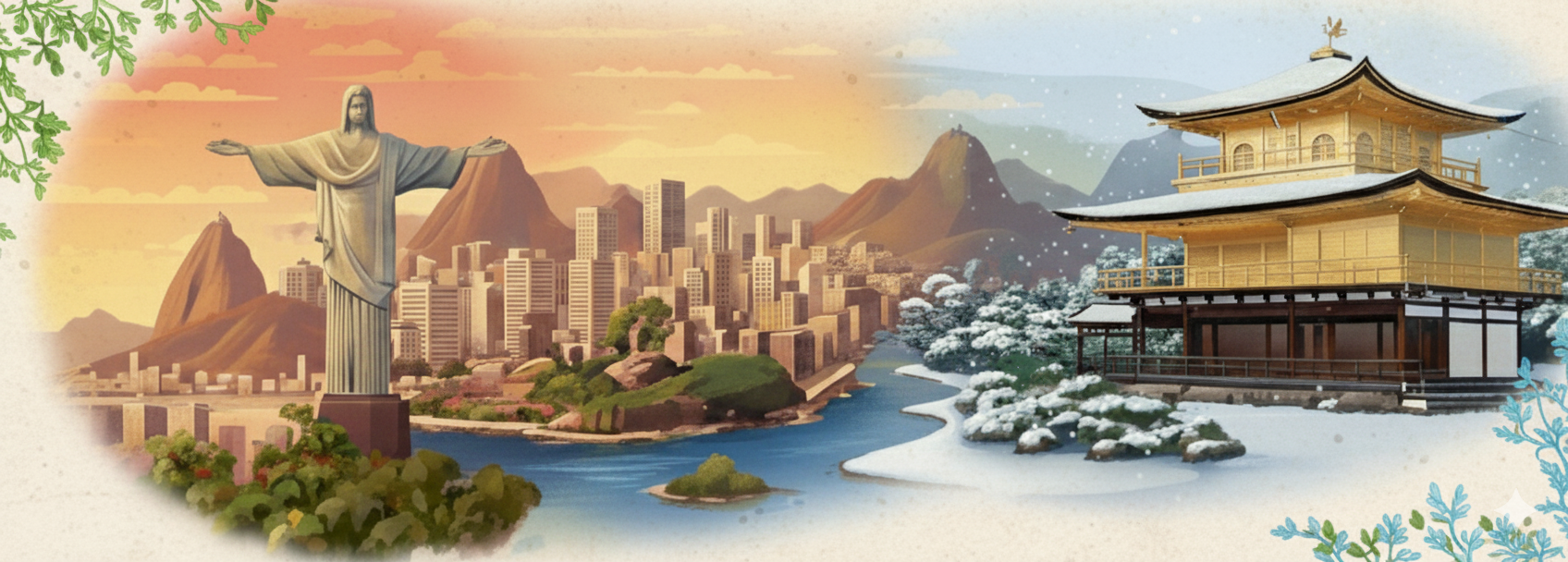
In the summer of 1992, in a vibrant coastal city in Brazil, global leaders from nearly every country came together. This meeting wasn’t just another conference; it was a historic, collective recognition that economic growth and environmental protection must go hand-in-hand. This event was a turning point, laying the essential groundwork for a global partnership on sustainability. It also gave rise to a series of international agreements that would define climate action for decades to come.
The Rio Earth Summit 1992 , officially known as the United Nations Conference on Environment and Development (UNCED). It was a landmark event in global environmental policy. Held in Rio de Janeiro, Brazil, it was a pivotal moment where the international community came together to address the urgent need to balance economic development with environmental protection. It was the largest gathering of world leaders at the time, demonstrating a new level of global commitment to these issues.
“Meeting the needs of the present without compromising the ability of future generations to meet their own needs.”
It is the basic principle of sustainable development, and the summit was crucial in establishing it. A revolutionary idea that combined the often-conflicting goals of economic growth and environmental protection. The Rio Earth Summit gave birth to non-binding principles as well as legally binding conventions.
The Non-Binding Principles
The non-binding principles set out guiding principles and action plans, although these plans were not legally enforceable, carried significant political and moral weight. It mainly includes “The Rio Declaration on Environment and Development” and “The Agenda 21”
The Rio Declaration on Environment and Development is a set of 27 principles that guided the future of international environmental law. It includes,
- Principle of Common but Differentiated Responsibilities: states that while all countries share the responsibility for protecting the environment, developed countries should take the lead because they are historically responsible for the majority of environmental degradation. And,
- The Polluter Pays Principle: The polluter should bear the cost of pollution prevention and control.
The Agenda 21 is A comprehensive action plan for sustainable development in the 21st century. It outlines strategies for countries to follow in areas ranging from poverty and health to waste management and technology transfer. It was a blueprint for governments at all levels to integrate environmental, social, and economic goals.
Legally Binding Conventions
The Rio Earth Summit 1992 also gave birth to three legally binding conventions, now known as “The Rio Conventions“. These Rio Conventions became the foundation stone of global environmental governance in future.
- United Nations Framework Convention on Climate Change (UNFCCC): It established an international environmental treaty to combat “dangerous human interference with the climate system”. It set a framework for future action, which would later lead to the Kyoto Protocol and the Paris Agreement.
- Convention on Biological Diversity (CBD): This treaty promoted the conservation of biodiversity. It requires nations to take inventories of their plant and animal life and to protect their endangered species.
- United Nations Convention to Combat Desertification (UNCCD): This convention addresses land degradation and desertification, particularly in arid and semi-arid regions, and emphasises the importance of sustainable land management.

The three Rio Conventions are the result of concerns over similar environmental and development issues. As challenges related to climate change, desertification, and biodiversity loss grow, they work more closely together, developing cross-cutting solutions. While all three Rio Conventions are crucial, the one most central to the global narrative on combating climate change since 1992 is the United Nations Framework Convention on Climate Change (UNFCCC).
The World’s First Climate Constitution
The United Nations Framework Convention on Climate Change (UNFCCC) was born at the Rio Earth Summit in 1992. Over the next year, 166 countries signed the agreement.
To make the plan a reality, at least 50 countries had to officially approve it. That happened on March 21, 1994, and the convention came into force. Today, almost every country in the world, 198 nations in total, are the party to the UNFCCC. They gather annually in the Conference of Parties also known as the United Nations Climate Change Conference.
The main goal of UNFCCC is to stabilise greenhouse gas concentrations in the atmosphere and to stop humans from dangerously messing with the climate system.
A key principle of the UNFCCC is “common but differentiated responsibilities”. This means all countries share a responsibility to address climate change, but developed countries, which have historically been the largest emitters, should take the lead and provide financial and technological support to developing nations.

The Next Step: From Framework to Action
While the UNFCCC was a crucial first step, it had a major limitation: it contained no binding emission targets. It was a promise to act, but not a plan with deadlines. The world knew it needed to move from a general framework to concrete action.
This led to the creation of the Kyoto Protocol in 1997. The Protocol was the first legally binding international treaty to set specific, quantified emission reduction targets for developed countries. It essentially took the UNFCCC’s table of contents and began to fill in the first chapter with a specific plan.
The Kyoto Protocol, 1997
The Kyoto Protocol, adopted in 1997, was the world’s first comprehensive plan to reduce greenhouse gas emissions. Owing to a complex approval and acceptance process, it entered into force on 16 February 2005. The Kyoto Protocol was based on the principles and provisions of the UNFCCC itself and followed its annexe-based structure.
The Protocol presented the first set of strict, legally binding rules, but only for a limited number of developed countries, such as those in Europe, Japan, and Canada. These were the countries that had been creating the most pollution for decades.
Their goal was to collectively reduce their greenhouse gas emissions by an average of 5% below what they were in 1990. This had to be done over five years, from 2008 to 2012. They needed to follow specific rules to do this. However, it did not require major developing countries, such as China and India, to make similar cuts.
The Kyoto Protocol created three market-based “mechanisms” to help countries meet their emission reduction targets flexibly and cost-effectively. These mechanisms are:
- Clean Development Mechanism (CDM): This allowed a developed country to invest in an emission-reduction project in a developing country. The developed country gets certified emission reduction (CER) credits, each equivalent to one tonne of CO2 for the reductions, and the developing country benefits from the investment and technology transfer.
- Joint Implementation (JI): This allowed a developed country to invest in an emission-reduction project in another developed country. The investor country then receives credit for the reductions.
- Emissions Trading: This allowed countries that have reduced emissions below their targets to sell their “extra” emission credits to countries that are struggling to meet theirs.

Systems to Monitor the Emission Targets
The Kyoto Protocol also established a robust system to monitor whether countries met their emissions targets. This system is based on three main pillars:
- Mandatory Reporting: Parties to the Protocol are required to submit an annual inventory of their greenhouse gas emissions. This data is prepared by national experts and verified by a team of international experts. It’s a fundamental part of the monitoring system, as it provides the raw data to track a country’s progress.
- The Compliance Committee: The Protocol created a Compliance Committee with two branches: a facilitative branch and an enforcement branch.
- The facilitative branch helps countries that are having trouble meeting their targets by providing advice and support.
- The enforcement branch applies penalties to countries that fail to meet their targets.
Doha Amendment, 2012
The Doha Amendment was adopted to renew the second phase of the Kyoto Protocol. It was proposed to start from January 2013 to December 2020. The amendment includes:
- New commitments for 37 industrialised countries for whom the fulfilment of phase one provisions was mandatory to achieve.
- A revised list of Greenhouse Gases to be reported on by Parties in the second commitment period; and
- Amendments to several articles of the Kyoto Protocol which specifically referenced issues pertaining to the first commitment period and which needed to be updated for the second commitment period.
During the second commitment period, Parties committed to reduce Greenhouse Gas emissions by at least 18 per cent below 1990 levels in these eight years. The problem was, by this time, the world had changed. Many of the original members, including the U.S., Russia, Japan, and Canada, decided they would not sign up for this second phase. They felt it was unfair because the world’s fastest-growing economies, like China and India, were still not required to make any reductions in Greenhouse Gas emissions.
Even though the Doha Amendment was a legal extension, it showed that the Kyoto Protocol’s approach, where only a few countries had strict targets, was no longer working. It was a clear sign that a new, more inclusive agreement was needed, one that would bring every nation to the table.

Studio Green Architects
Do you have a project and you want to make it more sustainable?
Conclusion
The journey from Rio to Kyoto showed us the world’s first, often-difficult, steps toward climate cooperation. Ultimately, the Kyoto Protocol was a crucial first step and a powerful lesson in global cooperation. It laid crucial groundwork, but also revealed the immense challenge of getting every country on the same page, creating an imbalance that would ultimately limit its success. The world needed a more universal and flexible solution.
It proved that countries could come together and set a global goal, but it also showed us that a top-down, mandatory approach was difficult to enforce when some of the world’s largest emitters weren’t included. The world needed a new way forward, a framework that was flexible, inclusive, and could unite every nation in a shared mission.
How did a new international treaty, forged in Paris, manage to achieve what Kyoto couldn’t? What is the secret behind its groundbreaking, inclusive structure? In our next article, we’ll dive into the Paris Agreement, a treaty that finally brought every nation to the table, and explain how its core component, the Nationally Determined Contributions (NDCs), is reshaping the fight against climate change.